









The New Science of Sleep: 6 Things We're Learning About Better Rest
Sleep advice has historically been pretty predictable. You know, get eight hours, avoid caffeine, put your phone down, etc, etc.
But there's still so much we don't fully understand about sleep, which is part of what makes new research so interesting. Every year, scientists uncover more about the small things that shape how well we rest, from the light we see during the day to how consistent our schedules are at night.
Here are six especially interesting things sleep science is teaching us right now.
 1. Your Best Sleep Habit Starts During the Day
When we talk about good sleep, we spend a lot of time thinking about what happens at nighttime, in the bedroom. But what you do during the day can have a big effect on how you sleep, too, and something as simple as getting more daylight may help.
A 2026 study that tracked people's light exposure and sleep found that those who spent more time exposed to daylight tended to fall asleep and wake up earlier. Researchers also found a connection between more consistent light exposure and deeper sleep.
It all comes back to your circadian rhythm, or your body's internal clock. Light is one of the main cues your brain uses to figure out what time of day it is.Ggetting plenty of light during the daytime helps reinforce that it's time to be awake, while darkness signals that it's time to wind down.
The takeaway: Better sleep doesn't only start at bedtime. Spending some time outside during the day, especially in the morning, can help keep your internal clock on track and make it easier to feel sleepy when nighttime rolls around.
 2. Your Schedule Deserves More Respect
Seven hours of sleep is seven hours of sleep, right? Well, not exactly.
Researchers are increasingly finding that when you sleep matters, too. Sleep regularity, or how consistent your bedtime and wake time are from one day to the next, seems to play an important role in how rested and alert you feel.
A 2026 study examined people with later and more irregular sleep schedules and found that inconsistent timing was connected to more morning sleepiness and poorer neurobehavioral performance. Interestingly, participants didn't always report feeling sleepier, which suggests that our own sense of “I'm functioning just fine” isn't always the most accurate.
The takeaway: If your weekday and weekend sleep schedules barely resemble each other, it may be worth bringing them a little closer together. You don't have to become the kind of person who happily wakes up at 6:15 on a Sunday, but keeping your sleep and wake times reasonably consistent can make it easier for your body to stay in rhythm.
 3. One Good Night Doesn’t Erase a Bad One
After five days of questionable sleep decisions, Saturday morning can feel like a chance to wipe the slate clean and catch up on some lost zzzz's. Unfortunately, your brain may be keeping receipts.
In a 2026 Nature Communications study, researchers used brain imaging and machine learning to identify patterns associated with sleep deprivation. Even after participants got a night of recovery sleep, some of those changes were still detectable, suggesting that bouncing back from lost sleep may take a little more than one solid night.
That doesn't mean a late night here and there is cause for alarm. It simply means that sleep works best when it's fairly consistent, rather than something you routinely skimp on during the week and try to make up for on the weekend.
The takeaway: Think of sleep as something you need to maintain over time. Catch-up sleep can still feel good and may help, but your body and brain generally do better with steady rest than with a cycle of running on empty and trying to refill the tank all at once.
 4. Exercise Helps, and Walking Counts
Good news for the gym-haters among us! Exercise can support better sleep, but you don't have to make doing burpees your entire personality.
A large 2026 meta-analysis looked at 200 randomized trials involving more than 23,000 adults. Overall, exercise was associated with improvements in subjective sleep quality, with walking showing particularly promising results. Researchers did note that the certainty of the evidence was very low, so take it with grain of salt. But still, it's an encouraging pattern and the broader message is refreshingly attainable: you don't necessarily need a punishing workout to support better rest.
The takeaway: A walk counts, and so does a class you actually enjoy. The best movement for sleep may be the kind you're most willing to do.
 5. Pink Noise Is Having a Moment
Pink noise has been getting more attention in sleep research, and a recent MIT study made things even more interesting. Basically, researchers found that bursts of pink noise could strengthen the slow brain waves associated with deep sleep.
It's important to note that the study was small, and the sounds were carefully synchronized with participants' brain activity. So, this isn't the same as simply putting on pink noise before bed.
Still, it's a super interesting discovery and a reminder that scientists are still learning how sound interacts with the sleeping brain. If you're curious what pink noise sounds like, Ozlo's sound library includes Pink Haze, a softer, lower-frequency sound designed for bedtime.
The takeaway: Pink noise isn't a proven shortcut to deeper sleep, but it's definitely one area of sleep science worth watching.
 6. Better Sleep Tech Doesn't Mean Silence
For years, the assumption around nighttime noise has been pretty simple: the less you hear, the better you'll sleep. It's part of why active noise cancellation has become so popular, since ANC is designed to make your environment quieter by reducing outside sound. But ANC doesn't work equally well on every kind of noise.
It's most effective against steady, low-frequency sounds, like the hum of an engine or HVAC system. Bedrooms, on the other hand, tend to come with more unpredictable disruptions, from snoring and footsteps to barking dogs and doors closing.
That's why sleep-specific technology can take a different approach.
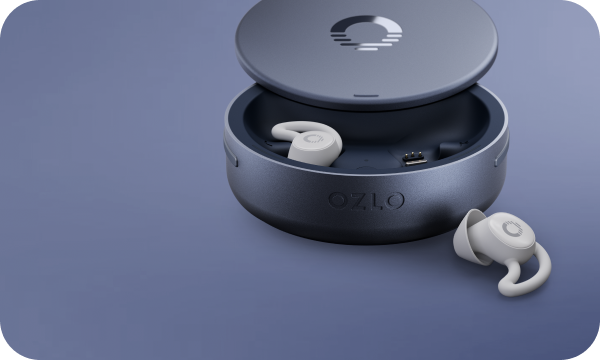
Instead of trying to cancel every sound completely, Ozlo Sleepbuds combine passive noise blocking with steady, soothing audio that helps make sudden noises less noticeable. The result is a more consistent sound environment, which can make it easier for your brain to stay settled into sleep instead of reacting to every little change.
There are practical benefits to this approach, too. Without the extra hardware required for ANC, Sleepbuds are smaller, more comfortable, and better suited for wearing through the night.
The takeaway: Better sleep tech doesn't have to create perfect silence. Sometimes, the better goal is simply to make the sounds around you feel less disruptive, so your brain has fewer reasons to wake up.
 The Big Sleep Lesson of 2026
Sleep is remarkably complex, but supporting it doesn't always have to be. If there's a theme running throughout all this recent sleep research, it's that consistency is key.
Consistent light, consistent movement, consistent bedtimes, and consistent nighttime environments all lead to better sleep. Seems like sometimes your brain just likes knowing what happens next.


